
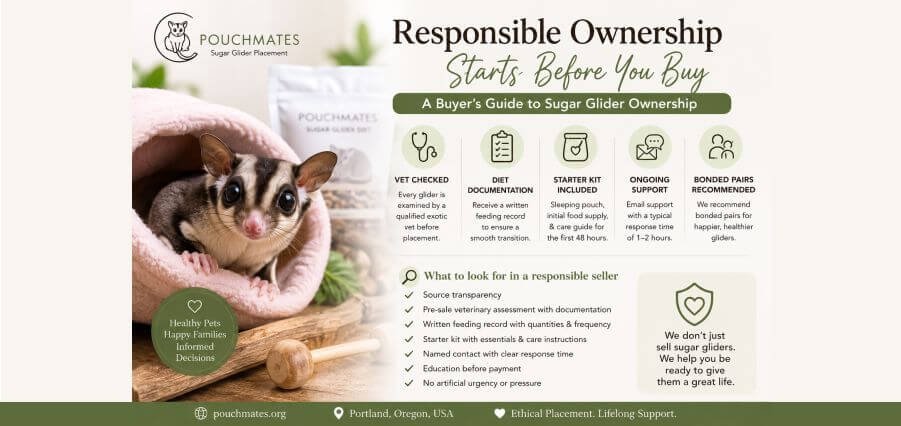
What prospective sugar glider owners should know before making a commitment, and how one Oregon-based provider is prioritizing education before placement.
As exotic pet ownership continues to grow across the United States, sugar gliders have become increasingly popular among animal enthusiasts. Their intelligence, affectionate behavior, and unique characteristics have made them appealing companions. However, their growing popularity has also highlighted an important concern: many first-time owners underestimate the specialized care these animals require.
Exotic animal veterinarians continue to report preventable health issues in captive sugar gliders, including metabolic bone disease, stress-related illnesses, and self-mutilation. These conditions are often linked to improper nutrition, inadequate socialization, and insufficient owner preparation. While organizations such as the American Association of Exotic Mammal Practitioners (AAEMP) and the Association of Sugar Glider Veterinarians (ASGV) publish valuable husbandry guidance, much of that information reaches owners only after a purchase has been made.
Recognizing this gap, Pouchmates, a Portland, Oregon-based sugar glider placement provider, places education at the center of its placement process. The company believes that informed ownership begins before an animal is brought home, helping prospective owners make responsible, long-term decisions.
Why Pouchmates Prioritizes Education
With more than a decade of experience, Pouchmates operates its own breeding program while also working with carefully vetted breeding partners. According to the company, every sugar glider receives a veterinary health assessment before placement.
According to Pouchmates:
“We discuss the bonded pair recommendation with every prospective buyer before purchase, not afterward. If a single sugar glider is suitable for someone’s lifestyle, we explain the level of daily interaction and commitment required to support its wellbeing.”
Rather than encouraging impulse purchases, the company focuses on helping buyers understand the responsibilities associated with exotic pet ownership.
Every placement includes:
- Veterinary-assessed sugar gliders before placement
- Individual feeding documentation
- A starter kit with food and a sleeping pouch
- A 30-day care guide
- Post-placement email support
- Guidance on locating experienced exotic-animal veterinarians
- Recommendations for bonded pairs whenever appropriate
The company also provides referral resources for veterinarians experienced in treating exotic mammals, helping owners establish ongoing veterinary care after bringing their sugar gliders home.
Understanding Sugar Gliders
Sugar gliders (Petaurus breviceps) are small nocturnal marsupials native to Australia and parts of Southeast Asia. Unlike many traditional small pets, they have specialized nutritional, behavioral, and veterinary care requirements.
Prospective owners should understand that sugar gliders typically:
- Live between 10 and 15 years
- Weigh approximately 113–150 grams as adults
- Are most active during the evening and nighttime hours
- Naturally live in social colonies
- Require daily interaction, enrichment, and mental stimulation
Because of these long-term care requirements, owning a sugar glider is often considered a commitment comparable to caring for a dog rather than a conventional cage pet.
Nutrition Is Essential
Nutrition plays a critical role in maintaining a sugar glider’s health.
In their natural habitat, sugar gliders consume nectar, pollen, insects, tree sap, and other naturally available food sources. Replicating this nutritional balance in captivity requires more than offering fruit or commercial pellets alone.
Common dietary mistakes include:
- Feeding excessive amounts of fruit, which may contribute to calcium-phosphorus imbalances associated with metabolic bone disease
- Relying solely on commercial pellets without providing balanced vegetables and adequate protein sources
Structured feeding programs such as BML and TPG are widely recognized among experienced owners and exotic-animal veterinarians.
To support a smooth transition, Pouchmates provides owners with detailed feeding records documenting each sugar glider’s established diet prior to placement.
Social Companionship Matters
Sugar gliders are naturally social animals that thrive in colonies. Extended isolation has been associated with behavioral concerns, including excessive grooming and self-mutilation resulting from chronic stress.
For this reason, bonded pairs are frequently recommended, particularly for first-time owners or individuals who spend significant time away from home.
Pouchmates discusses these recommendations during pre-placement consultations and offers bonded pairs whenever they are appropriate for a buyer’s circumstances.
Proper Housing Supports Long-Term Wellbeing
A well-designed habitat contributes significantly to both the physical and psychological health of sugar gliders.
Recommended housing features include:
- Tall wire cages with secure bar spacing
- Soft fleece sleeping pouches
- Large solid-surface exercise wheels
- Climbing branches, ropes, and enrichment toys
- Stable temperatures between 65°F and 80°F
Glass aquariums and poorly ventilated enclosures are generally discouraged because proper airflow is important for respiratory health.
Veterinary Care Requires Specialized Expertise
Sugar gliders benefit from routine care provided by veterinarians experienced in treating exotic mammals.
Preventive care generally includes:
- Annual wellness examinations
- Regular weight monitoring
- Dental assessments
- Reproductive health discussions when appropriate
Prospective owners are encouraged to identify an experienced exotic-animal veterinarian before bringing a sugar glider home. Organizations such as the AAEMP and ASGV provide directories that can help owners locate qualified professionals.
Evaluating Pouchmates
Individuals searching for Pouchmates reviews often want reassurance that the provider follows responsible animal welfare practices.
According to its published placement process, Pouchmates offers:
- Sugar gliders sourced through its in-house breeding program and vetted breeding partners
- Veterinary health examinations before placement
- Individual feeding documentation
- Starter kits with food and care essentials
- Written care instructions and a 30-day ownership guide
- Referral resources for exotic-animal veterinarians
- Email support with a typical response time of one to two business hours
- Education-focused consultations before placement
These documented practices reflect many of the recommendations promoted by recognized exotic-animal organizations regarding responsible ownership and long-term animal care.
Preparing Before Bringing a Sugar Glider Home
The U.S. sugar glider market includes specialist breeders, placement providers, and commercial sellers whose standards of care may vary considerably. Conducting thorough research before purchasing can help prospective owners make informed decisions.
Before making a commitment, buyers should ask:
- Where was the sugar glider bred?
- Has the animal received a documented veterinary health examination?
- Can a written feeding record be provided?
- What supplies and educational materials are included with the placement?
- What post-placement support is available?
- Can the provider recommend an experienced exotic-animal veterinarian?
- How many years of experience does the provider have working with sugar gliders?
Equally important is how the provider approaches the placement process. Responsible providers emphasize education before accepting payment, openly discuss long-term care responsibilities, provide supporting documentation, and avoid high-pressure sales tactics.
By asking informed questions and choosing a provider committed to transparency, prospective owners can better prepare for the long-term responsibility of caring for a sugar glider while supporting positive animal welfare outcomes.
For additional information, prospective owners may contact Pouchmates at info@pouchmates.org. The company states that inquiries typically receive a response within one to two business hours.
Disclaimer –
This article is a work of original content created for public relations and informational purposes only. It may be published across multiple digital platforms with the full knowledge and consent of the author/publisher. All images, logos, and referenced names are the property of their respective owners and used here solely for illustrative or informational purposes. Unauthorized reproduction, distribution, or modification of this article without prior written permission from the original publisher is strictly prohibited. Any resemblance to other content is purely coincidental or used under fair use policy with proper attribution.